Comments
The end of the ‘two friends system’ in Kyrgyzstan
On 10 February 2026, President Sadyr Japarov issued a presidential decree dismis...


05.12.2025
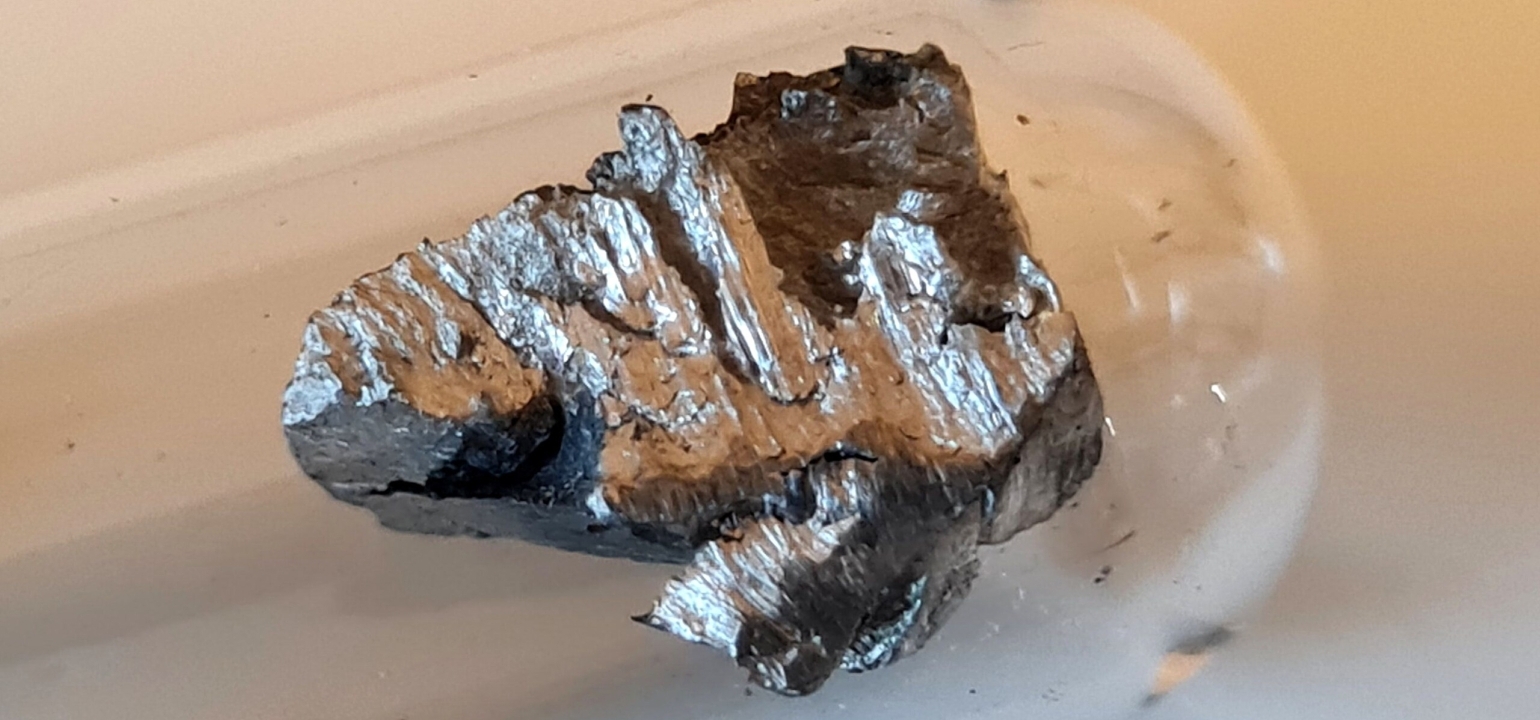
In its November statement, the state news agency Xinhua cited remarks by Xi Jinping, who emphasized that “[g]reen transformation is not only the essential way to address climate change, but also a new engine for economic and social development”. This message reflects the current trajectory of Chinese policy, which combines climate objectives with the pursuit of sustained technological and economic dominance. These days, China is the leading actor in the global rare-earth elements (REE) value chain, controlling roughly 70% of global extraction and around 90% of refining capacity. This dominance is the result of a long-term state strategy integrating industrial policy, national security priorities, and technological planning. Its purpose was to secure China’s position in the global technological race. Today, however, China’s status is increasingly challenged by Western efforts to reduce strategic dependence on Chinese raw materials. Fully aware of both its leverage and vulnerabilities, Beijing is investing in alternative technologies and sources of REE supply. Thus, it is buying itself time while attempting to preserve its structural advantages.
The Origins of China’s Dominance
China’s REE industry, which began to develop in the mid-20th century, accelerated significantly after Deng Xiaoping’s reforms and the market opening in 1978. These reforms spurred investment in extraction and refining technologies. In 1990, Chinese authorities designated REE as resources of strategic importance and placed them under special state protection, effectively preventing foreign corporations from conducting independent mining operations. Access to Chinese deposits became possible only through joint ventures with domestic partners and with explicit government approval from Beijing. This marked the beginning of a protectionist industrial framework that enabled China to retain control over the entire sector. At the same time, Western states — guided by short-term profit motives and seeking to avoid environmental costs — shut down their own separation facilities (plants responsible for extracting individual elements from ore or concentrates in the form of rare-earth oxides, REO). Instead, they relied on Chinese production. By 2012, firms from the United States, Germany, France, Canada, and Japan had invested more than 6 billion yuan (over USD 840 billion) in 38 companies operating in
China. As a result, China built an integrated value chain — from mining to the manufacturing of neodymium magnets. In parallel, the establishment of the state-owned China Rare Earth Group consolidated the entire REE sector and strengthened state control over exports and pricing policy.
China’s dominant position is also reinforced by substantial outbound investment. In 2024, Chinese mining and metals investments conducted under the Belt and Road Initiative reached a record $21.4 billion, with a significant share directed toward Latin America and Africa.
A Long-Term Strategy
Control over the rare-earth supply chain constitutes a central pillar of China’s long-term strategy to expand its economic and political leverage globally. Because of the technological and cost dominance in the REE separation system, Beijing has been considered an indispensable part of the global transformation. It has become a main supplier of the necessary commodities, used for magnet, turbine, or battery production.
More importantly, the rare-earth sector directly supports Xi Jinping’s overarching strategic objectives: achieving technological self-reliance by 2035 and consolidating the country’s status as a global innovation leader by 2049. This approach reflects a strategic assessment formulated already in the 1980s — namely, that China would struggle to compete with the United States in frontier technologies such as semiconductors, microprocessors, and military systems. Instead, Beijing sought to build influence in a domain where it could shape the international environment on its own terms.
China’s “Bottleneck” and Global Pressure
China leverages its control over the REE sector as a tool of influence in trade and technology. Since the early 2000s, Beijing has steadily strengthened oversight of this market, introducing export limits to increase domestic value added in the processing industry. The 2010 halt of REE exports to Japan following a diplomatic incident, as well as the restrictions on REE and magnets implemented between 2023 and 2025, demonstrated to the world the strategic leverage China wields.
However, this concentration of production also poses risks for China itself. Beijing is aware of these vulnerabilities and feels pressure from Western strategies of de-risking and friendshoring, which seek to relocate supply chains to allied countries and could disrupt the entire system. Western countries, led by the United States, are increasingly coordinating efforts to reduce reliance on Chinese processing, challenging China’s position. In response, China invests in alternative materials, recycling, and urban mining, i.e., recycling the electronic waste. At the same time, it promotes a “dual circulation” economy focused on strengthening the domestic market and reducing dependence on exports. On the international stage, China also positions itself as an advocate for environmental protection and opposes American deep-sea mining, a potential arena for future competition among the world’s largest economies for critical resources.
The key goal of these measures is to extend the period during which China maintains a key position in the supply chain until the West builds its own capabilities. In this context, China’s green transition is more than just a climate policy; it is deliberately constructed as a tool of economic influence under Xi Jinping’s leadership.
Przeczytaj też
Comments
On 10 February 2026, President Sadyr Japarov issued a presidential decree dismis...
Comments
The security cooperation agreement signed in early January of this year opens ne...
Comments
On January 17, 2026, the Agreement on Marine Biological Diversity of Areas Beyon...
Comments
Information regarding planned amendments to the German Federal Intelligence Serv...
Web development & Web design: Artixen.net | © 2024 Oppotrunity