Comments
The end of the ‘two friends system’ in Kyrgyzstan
On 10 February 2026, President Sadyr Japarov issued a presidential decree dismis...


01.10.2025
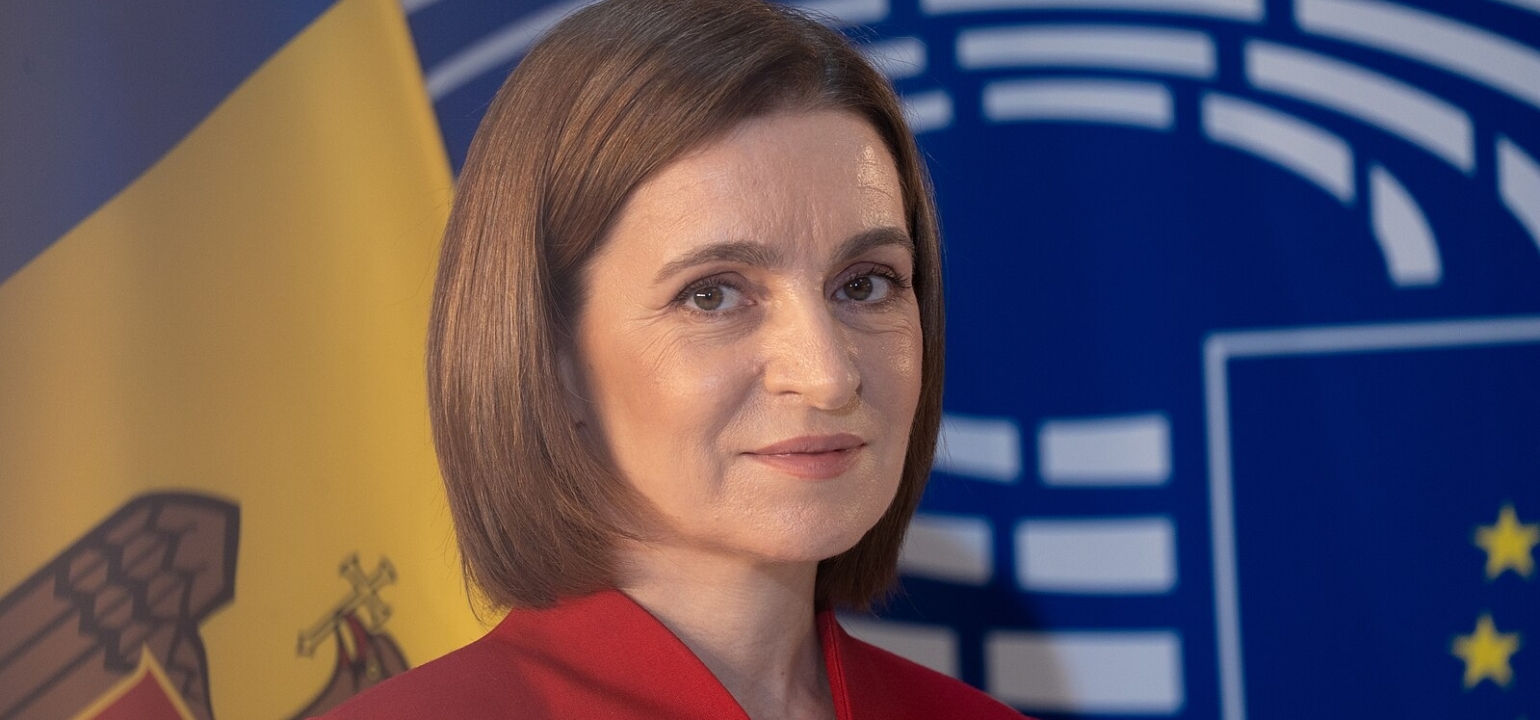
The Central Electoral Commission of Moldova has counted 100% of the votes cast in the country’s parliamentary elections. According to the results, the elections were won by the Party of Action and Solidarity (PAS) led by incumbent President Maia Sandu. That means that Moldova will probably remain pro-Western and pro-European in its policies.
The PAS party won 50.2% of the votes (792,557 out of 1,578,724 cast in 2274 polling stations). Its most significant opponent was the Patriotic Electoral Bloc (EPC), which accumulated different parties supporting Russia, the socialists and the communists. EPC gained 24.71% of all votes cast. Other organisations that got over 5% of votes were: the pro-European “Alternative” Political Bloc (7.96%), pro-Russian and leftist Our Party (6.20%) and pro-European and populist party Democracy at Home (PPDA). All remaining parties and blocs did not pass the electoral threshold.
The aforementioned result of the PAS party gives it a chance to continue governing alone. However, the experts claim that the support for the party has declined since the last elections and the grouping has lost 8 seats in the parliament.
The pro-Russian forces, which suffered a defeat in the elections, have already planned protests against the election result. The Moldovan website and channel NewsMaker reports that the participants are contacted via Telegram and promised 50-300 USD for taking part in the protest or recruiting others to join the demonstrations. The representatives of the socialist parties (which are included in the Patriotic Electoral Bloc) have strongly denied the information reported by the portal.
The Moldovan police, however, have confirmed that participants are gathering in Chișinău and that they are promised money.
The Russian Battle for Moldova
The success of the PAS party and, in a broader sense, pro-Western parties is primarily a defeat for Moscow, which tried to influence the outcome of the Moldovan elections in an unprecedented way. The situation was further complicated by Moldova’s difficult geopolitical position. Officially, the state includes the territory of the unrecognized Transnistria, whose quasi-independence was guaranteed by the Russian army after the collapse of the USSR; the army remains stationed there to this day. Moreover, Moldova includes the Autonomous Territorial Unit of Gagauzia, inhabited by Turkic-speaking, Orthodox Gagauz. Pro-Russian sentiments are prevalent among the residents of this territory.
All of these factors mean that Russia has long possessed—and still possesses—various means of influencing Moldova’s internal affairs. According to information provided by Reuters, Moscow used the Orthodox Church to recruit the “agents of influence” by organizing pilgrimages, giving the participants coupons and debit cards issued by Russian banks, and providing instructions on how to spread anti-EU and anti-Western propaganda via social media. Since the accounts were opened by Moldovan citizens, it was more difficult to clearly trace the Russian involvement. This situation is similar to what happened during the recent presidential elections in Romania.
The Moldovan media sphere was flooded with fake posts, videos, even websites spreading false information or creating fictitious scandals, primarily involving President Maia Sandu. Artificial intelligence tools were widely used to produce materials that closely resembled real ones.
The PAS party representatives claimed that Russia spent hundreds of millions of dollars on vote-buying and disinformation campaigns. The New York Times, reporting on some of these Russian practices, also highlighted that this push coincided with the Trump administration’s decision to scale back support for numerous foreign initiatives, including financial aid to Moldova and backing for independent media outlets such as Radio Free Europe or Voice of America.
Alongside disinformation efforts, the pro-Russian bloc focused its narrative on threats to Moldova’s security and sovereignty. Politicians from the Patriotic Electoral Bloc argued that by bringing Moldova closer to the European Union, the PAS party was endangering the country’s national identity (there is still a movement in Moldova advocating unification with Romania due to the historical and cultural affinity of the two nations). There were also widespread accusations that the ruling party could drag Moldova into the Russian-Ukrainian war.
The fact that, despite such extensive Russian involvement, it was not possible to effectively influence the elections in Moldova, a country of 2.4 million people, is not only a success for the republic but also a clear defeat for Moscow.
The Unexpected Success of the West
The elections in Moldova show that despite Russia’s vast activity and involvement, it is the European Union that has the strongest influence on Moldovan society – even if this influence is exercised unconsciously. As in the cases of Ukraine and Georgia, the vision of life within the European Union (even if not entirely aligned with reality) is far more attractive than anything Moscow has to offer.
For Brussels and Western countries, this is a clear signal that, despite its challenges, the European project still appears to many as the best political alternative in our region. For countries like Moldova and Ukraine, the European Union is not a maze of incomprehensible and unfriendly regulations, but a promoter of the rule of law and a promise to end pervasive corruption. It also represents economic development on a scale incomparable to alternative political projects elsewhere in the world.
For the European Union, struggling with rising Euroscepticism, the pro-European enthusiasm of societies in Eastern Europe and the Caucasus could provide a much-needed and positive boost to rebuild the Union’s image among its citizens. This is one of the factors that Brussels and EU members should consider alongside strictly economic or geopolitical concerns in negotiations regarding the membership of Moldova, as well as Ukraine.
Good News for Kyiv
Maintaining a pro-Western course in Chișinău is certainly good news for war-stricken Ukraine. In the darkest scenarios at the outset of Russia’s aggression against Ukraine, Moscow was predicted to launch an attack from Transnistria toward Odesa.
A shift of Moldova toward pro-Russian positions could create a range of threats for Kyiv – from facilitating Russian secret intelligence operations, to requiring the diversion of forces to defend this direction (similar to how Ukrainian troops are tied down by potential threats from Belarus), and even to a scenario in which Russian aircraft could be stationed and refueled at Moldovan airports.
Therefore, it is not surprising that Ukrainian President Volodymyr Zelensky has already congratulated Moldova on its election results. In his post on X, he noted that “a geopolitical vacuum is always an invitation for Russian aggression,” urging the West to continue supporting Moldova after the elections. He also mentioned Georgia, which, in his view, is drifting away from Europe, similarly to Belarus, but the West should not turn a blind eye to what is happening in these countries.
The results of Moldova’s parliamentary elections made the headlines on Ukrainian news portals, which indicates that Ukrainians were closely following the political developments of their neighbour. Ukrainian analysts emphasized that Moldova and its current authorities are an important ally for Kyiv and a decidedly pro-Ukrainian government. Chișinău will therefore remain a partner for Ukraine, particularly in the context of European Union integration.
The End of the Russian Soft Power
The defeat in Moldova demonstrates that Russia’s full-scale aggression against Ukraine has effectively undermined its soft power and its ability to exert positive influence on other countries. The tools used by Moscow during Moldova’s election campaign indicate that it is becoming increasingly difficult for Russia to build a compelling political and social “offer” or an attractive alternative model to the European Union.
The lack of such a model means that in order to keep other countries within its sphere of influence, Russia may increasingly rely on force (as it is attempting in Ukraine), political corruption, or the lack of alternatives. This, in turn, suggests that Russia will more often treat the competition for the hearts and minds of individual nations as a zero-sum game, where failure could result not in a temporary, but a permanent escape of a given country from Russian tutelage.
For countries that are not under more or less direct Russian control, this is a positive signal, as it indicates that Russia’s ability to destabilize political situations and exert real influence over elections is weakening. This is particularly good news for countries with large Russian-speaking minorities within their societies
On the other hand, for countries currently within Russia’s sphere of influence this is negative news. Faced with a lack of alternatives – and emboldened by the world’s moderate response to its aggression against Ukraine – Russia is likely to rely more on violence to keep states within its orbit. This poses a direct threat to Belarus, where some Russian nationalists have already openly threatened a “repeat of the Ukrainian scenario”.
Photo source: Wikimedia Commons
Przeczytaj też
Comments
On 10 February 2026, President Sadyr Japarov issued a presidential decree dismis...
Comments
The security cooperation agreement signed in early January of this year opens ne...
Comments
On January 17, 2026, the Agreement on Marine Biological Diversity of Areas Beyon...
Comments
Information regarding planned amendments to the German Federal Intelligence Serv...
Web development & Web design: Artixen.net | © 2024 Oppotrunity