Comments
The end of the ‘two friends system’ in Kyrgyzstan
On 10 February 2026, President Sadyr Japarov issued a presidential decree dismis...


29.12.2025
On January 17, 2026, the Agreement on Marine Biological Diversity of Areas Beyond National Jurisdiction (BBNJ) — also known as the High Seas Treaty — will enter into force. While public attention has largely focused on the environmental significance of its ratification, its geopolitical dimension is equally important. The BBNJ Treaty’s entry into force will substantially strengthen international environmental legal resistance to deep-sea mining and, to some extent, fill regulatory gaps that the International Seabed Authority has struggled to address. It will also constitute a significant obstacle to U.S. President Donald Trump’s efforts to initiate the exploitation of critical resources from the ocean floor.
On September 19, 2025, the BBNJ Agreement, adopted in 2023, reached the required threshold of 60 ratifications, following Morocco’s accession. The treaty’s primary objective is to establish a legally binding framework for the conservation and sustainable use of marine biodiversity on the high seas, including the protection of 30% of the ocean area by 2030. In accordance with its provisions, the BBNJ Agreement will formally enter into force on January 17, 2026. This represents a historic breakthrough in the regulation of the law of the sea, particularly in the context of states’ and companies’ efforts to secure access to critical raw materials essential to the modern economy.
A Regulatory Deficit amid Resource Abundance
The International Seabed Authority (ISA) is a UN-affiliated body responsible for managing the seabed beyond national jurisdiction (ABNJ), referred to as the “common heritage of mankind.” The ISA has been working on the development of final, binding regulations — the so-called Mining Code — governing the commercial exploitation of seabed resources, in line with the principles of the United Nations Convention on the Law of the Sea (UNCLOS). Despite years of negotiations and ambitious timelines (the ISA Council was expected to present draft rules on the commercial exploitation of deep-sea minerals in July 2025, during its 30th Session), key issues remain unresolved, resulting in a persistent regulatory gap.
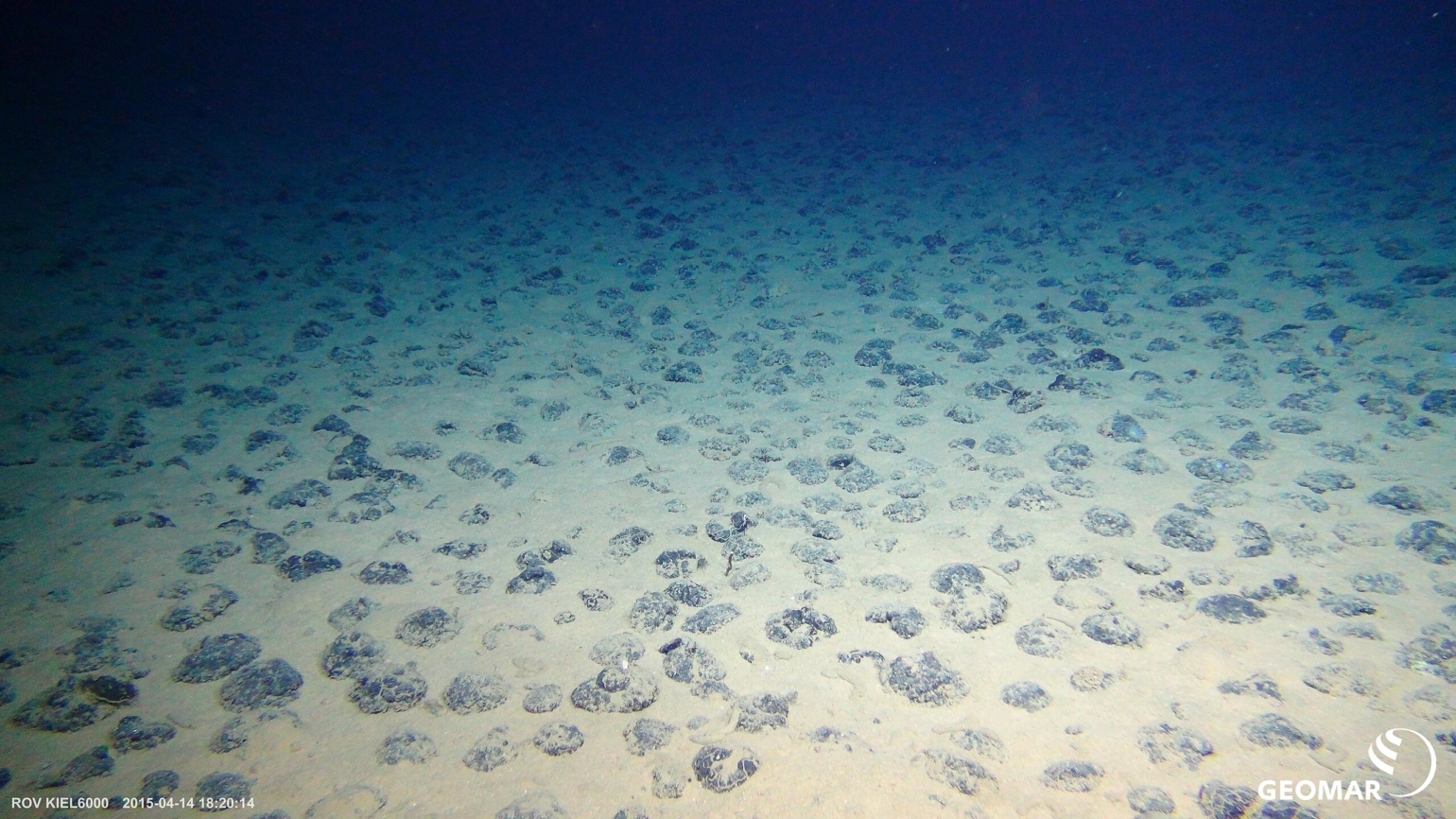
The stakes are exceptionally high. The deep ocean, particularly in the eastern Pacific, contains vast deposits of polymetallic nodules located at depths of 4–6 kilometers. They happen to be rich in metals critical to the global economy, including nickel, cobalt, manganese, copper, and rare earth elements (REEs). According to the U.S. Geological Survey’s (USGS) estimations, a single area of the eastern Pacific can be of pivotal importance. Known as the Clarion–Clipperton Zone (CCZ), this area, located roughly 1,300 nautical miles southwest of San Diego, California, is at the centre of global deep-sea mining ambitions. That is, it contains more nickel, cobalt, and manganese than all known terrestrial reserves combined. Forecasts by the International Energy Agency (IEA) indicate that by 2040, demand for copper and rare earth elements will have increased by 40%, while demand for lithium, cobalt, and nickel will have risen by as much as 90%. Against this backdrop, concretions have become an object of intense interest for both industry and the world’s largest economies.
Advocates and Opponents
Supporters of deep-sea mining argue that, unlike terrestrial extraction, the recovery of concretions is highly efficient and could allow for the use of nearly 100% of the material in metallurgical processes, without generating solid waste. Moreover, potential extraction beyond national jurisdictions is seen as an opportunity to spread risk through source diversification. Simultaneously, delays in accessing these resources may hinder the achievement of climate targets and the energy transition. From this perspective, launching deep-sea mining is framed as a pathway to accelerating the shift toward clean energy.
However, the primary reason for the ISA’s delays in establishing clear rules for deep-sea mining lies in environmental protection. Environmental organisations, scientists, and some companies operating in the battery metals market warn of the potentially severe damage that disturbance of the seabed could cause.
The lack of comprehensive knowledge about how such unprecedented interference might affect deep-sea biodiversity and the ocean’s key functions — as a carbon sink and a source of protein for global food systems — has led to calls for caution. As a result, the European Parliament, Germany, Chile, Spain, and many Pacific island states have joined appeals for a temporary moratorium on deep-sea mining. In addition, major global corporations such as BMW, Microsoft, Google, Volvo, and Volkswagen have pledged not to purchase metals derived from this type of extraction until its environmental impact has been thoroughly assessed.
At the same time, the lack of final regulations does not preclude exploration activities. Since 1994, the ISA has been granting 15-year contracts for seabed exploration aimed at identifying prospective resources. To date, 22 such contracts have been awarded, with China and South Korea holding the largest number. The areas with the greatest resource potential include the CCZ, the central Indian Ocean, and the Peru Basin. China’s contracts cover, among others, parts of the CCZ in the Pacific, sections of the Central Indian Ridge, and areas of the western Pacific. South Korea, in turn, holds contracts in the CCZ and in the Indian Ocean. Other countries engaged in seabed exploration under ISA contracts include Russia, India, Japan, Singapore, the Cook Islands, Germany, and France.
Tightening the Regulatory Framework
The provisions of the BBNJ Agreement will significantly affect the prospects for deep-sea mining by strengthening the international framework for the protection of the marine environment. First and foremost, the ratified Agreement establishes Area-Based Management Tools (ABMTs) and Marine Protected Areas (MPAs) in areas beyond national jurisdiction. ABMTs are to be implemented through the designation of high-seas areas in which States Parties jointly determine access rules and permissible levels of activity, based on risk assessments and scientific data. MPAs constitute a specific form of ABMT and cover areas subject to enhanced protection regimes, including permanent conservation objectives, defined restrictions on activities, and obligations for regular monitoring and reviews of effectiveness.
The High Seas Treaty does not directly limit the competences of the International Seabed Authority; rather, both instruments are intended to complement each other within the UNCLOS framework. In practice, however, if marine protected areas are established in a given location, the ISA — when granting exploration (and, in the future, exploitation) licences — will be required to take them into account. This could potentially complicate or even block plans to initiate extraction, or in some cases even exploration, in those areas. In addition, the Treaty introduces a binding requirement for mandatory Environmental Impact Assessments (EIAs) for activities in ABNJ, which will demand more rigorous analyses, including consideration of cumulative impacts. This is precisely one of the gaps in the current draft regulations developed by the ISA. Moreover, the BBNJ Treaty is grounded in the precautionary principle and the use of the best available scientific knowledge, a factor that further strengthens the position of states, international organisations, and companies calling for a moratorium or a preventive pause in deep-sea mining.
A Breach in the Law of the Sea System: TMC and Trump Test the Limits of International Regulation
The leading actor seeking to open the world’s first deep-sea mine is the Canadian company The Metals Company (TMC). Its sponsoring state under ISA exploration contracts is the Republic of Nauru (entities applying for exploration rights under ISA contracts must be sponsored by a partner state). The company has announced plans to begin extraction in the eastern Pacific — possibly as early as the end of 2027 — regardless of whether the ISA regulatory framework is finalized. As its CEO argues, the negotiating deadlock within the ISA and delays in adopting binding rules demonstrate the failure of multilateralism. To achieve this objective, TMC’s U.S.- based subsidiary submitted applications in April 2025 for a commercial mining permit and two exploration licences under U.S. law. All of that was possible due to regulations of the National Oceanic and Atmospheric Administration (NOAA) and the 1980 Deep Seabed Hard Mineral Resources Act (DSHMRA). TMC takes advantage of the fact that the United States has never acceded to the United Nations Convention on the Law of the Sea and is therefore not a member of the ISA (membership is limited to UNCLOS States Parties), which creates a legal opening for unilateral action. Shortly after filing its application, The Metals Company received substantial backing for its deep-sea mining plans through a strategic investment by Korea Zinc, a global leader in non-ferrous metal refining and precursor cathode active material (pCAM) technologies. Korea Zinc committed USD 85.2 million to TMC, including through stock purchases. In return, TMC guarantees the Korean refiner access to raw materials and cooperation on building processing capacity and pCAM production in the United States. The objective of this partnership is to establish an integrated critical minerals supply chain outside China. This approach is supported by the U.S. President Donald Trump, who in April 2025 signed an executive order aimed at accelerating the issuance of mining licences. The order positions the United States as a quasi-regulator of deep-sea mining in international waters, operating in parallel to the ISA. For TMC — disillusioned with the slow pace of work on global exploitation rules and having submitted its applications just days after Trump’s decision — the U.S. legal and political environment has become an attractive alternative.
Donald Trump seeks to free the United States from strategic dependence on, and the dominance of, China in the supply of critical minerals. Developing deep-sea mining in cooperation with allies such as Japan, India, and South Korea — states that already run national pilot programmes, test extraction systems in practice, and simultaneously develop their own processing capacities for seabed resources — offers the United States an opportunity to build competitive advantages in opposition to China.
Conclusions
The competition among the world’s largest economies for critical minerals has entered a new phase with the ratification of the Agreement on Marine Biological Diversity of Areas Beyond National Jurisdiction . The United States views deep-sea mining as a means of reducing dependence on Chinese supplies of critical metals and accelerating the development of its own resource base. For this reason, it is pursuing initiatives outside the UNCLOS and ISA framework. By relying on domestic regulations, Washington is simultaneously creating attractive opportunities for companies seeking to move rapidly into the commercial extraction phase. The final ratification of the BBNJ Agreement, however, creates a new reality. It strengthens international rules for the protection of the high seas while simultaneously constraining the flexibility of the U.S. approach. For the United States, this means the need to reconcile ambitions for rapid extraction with more complex environmental impact assessment requirements and the potential designation of protected areas. This, however, will most likely slow the pace of activities. China’s approach to deep-sea mining, by contrast, is based on viewing this sector as a natural extension of its broader resource strategy and a tool for maintaining its leading position in critical metals value chains. By acting actively within the ISA and supporting multilateral frameworks, China reinforces its image as a state operating in accordance with international law. At the same time, it is also safeguarding its own contracts and spheres of influence in the Clarion–Clipperton Zone. On the one hand, the adoption of the Agreement strengthens the Chinese model and further highlights the contrast with the more unilateral U.S. approach. On the other hand, tighter biodiversity protection rules may also slow China’s mining ambitions and potentially increase the costs of compliance with the new regime.
The next step following ratification will be the organisation of a Conference of the Parties (COP) within one year of the Treaty’s entry into force. It will initiate the process of operationalization of the new mechanisms, including procedures for establishing protected areas on the high seas. Although the BBNJ Agreement does not directly replace the ISA’s mandate to regulate seabed exploitation — serving instead as a complementary instrument — its entry into force creates a strong political mandate for coherent, high environmental standards. This will most likely delay and certainly further constrain the launch of commercial deep-sea mining. From now on, in addition to the lack of consensus within the ISA regarding the environmental impacts of extraction, any future mining project in international waters will have to be assessed in light of new, binding biodiversity protection obligations that are yet to be fully defined. This is undoubtedly a historic step for ocean protection. The key question, however, remains whether growing global demand for critical minerals and the strategic choices of major powers will ultimately undermine these efforts amid rising international tensions.
Photo: Manganese nodules on the seafloor – by ROV KIEL 6000, GEOMAR – Geomar Bilddatenbank, CC BY 4.0
Przeczytaj też
Comments
On 10 February 2026, President Sadyr Japarov issued a presidential decree dismis...
Comments
The security cooperation agreement signed in early January of this year opens ne...
Comments
Information regarding planned amendments to the German Federal Intelligence Serv...
Comments
In its November statement, the state news agency Xinhua cited remarks by Xi Jinp...
Web development & Web design: Artixen.net | © 2024 Oppotrunity