Comments
Ukrainian Attacks on Russian Oil and Gas Export Facilities in the Baltic Sea as a Lesson for Polish Critical Infrastructure Facilities
Ukrainian attacks are being carried out at a time when global oil prices are sur...


13.02.2026
On 10 February 2026, President Sadyr Japarov issued a presidential decree dismissing Kamchybek Tashiev, who had been undergoing medical treatment in Germany, from his positions as head of the State Committee for National Security (GKNB) and deputy prime minister. Tashiev’s three deputies were also sacked from their posts, and the speaker of parliament resigned from his post. Jumgalbek Shabdanbekov, the former deputy head of the GKNB and a supporter of Japarov, has been appointed as temporary head of the GKNB.
This should not be seen as a simple dismissal, but as a key move towards President Japarov gaining full power. It ends the system of dual power which had developed in Kyrgyzstan over the last five years of Japarov and Tashiev’s rule.
Tashiev reportedly learned of his dismissal from the media, which came as a surprise to him. In a statement issued through his colleagues, he expressed his loyalty to the president and his regret that he was unable “to say goodbye to each of his colleagues individually at the GKNB”. This wording is ambiguous, as it could be seen as an appeal to the security forces, although it could equally well be interpreted as a conciliatory gesture. The former security chief returned to Kyrgyzstan yesterday evening to be met at the airport by security forces. His rhetoric indicates that he has accepted his demotion. At the same time, Japarov announced in an interview with the state press agency that he would “maintain [his] friendship” with Tashiev; this could be interpreted as a promise to refrain from initiating criminal procedures against the former head of the GKNB.
So far, the president’s actions have strengthened both his defence of government institutions and his jurisdiction over the presidential security service. Japarov’s administration has justified the decision on the grounds of “interests of state”, in order to prevent social divisions and strengthen unity in this culturally and regionally divided country between north and south.
Full power for Japarov and the end of the duumvirate
This marks the end of the system of dual power that had stabilised the country since October 2020, following the protests that brought Japarov to the highest office in the land. At that time, he was released from prison thanks to Tashiev’s intercession (see Aksana Ismailbekova, ‘Native son Japarov: The embodiment of injustice?’). Since coming to power at the turn of 2021, the actions of the Japarov-Tashiev tandem have focused on centralising power and strengthening the state’s institutions and security forces in order to protect themselves from protests. They have also gradually made it more difficult to organise protests against them through administrative and legal measures, and have narrowed the space for media and civil society. This means that Tashiev’s dismissal will be more permanent than impermanent, if – as has so far been the case – the security forces remain loyal to the head of state, and furthermore if no public protests are reported. The interpretation suggested by some analysts (e.g. Daniil Kislov), namely that these events were staged and that the two acted in concert so Tashiev could replace Japarov in the future, seems unlikely.
The risk of internal destabilisation in Kyrgyzstan as a result of the rivalry between the two politicians must be taken into account in the context of the dynamic political situation in the country (see M. Popławski, ‘Azja Centralna stawia na siebie’ [Central Asia bets on itself], pp. 6-7). However, Tashiev’s dismissal came at a surprising moment and has not caused any major unrest so far, although it is the subject of lively public debate. It happened during a period of calm in the country, and not as the result of any increase in public tensions between Japarov and Tashiev. The latter has not ruled out participating in the presidential elections, which are to be held in early 2027, and he still mentions the possibility of moving the country’s capital from the north to the south, i.e. from Bishkek to Manas (formerly Jalal-Abad), a suggestion which has been interpreted by Kyrgyz society as Tashiev’s desire to gain more power. Journalists have referred to the balance of power between them in terms of appointments to key positions in the state.
Success: no international or regional repercussions
On the international level, China has so far shown some interest in the situation in Kyrgyzstan. The day after the head of the security service’s dismissal, China’s ambassador was received at the Kyrgyz foreign ministry. On the day of Tashiev’s dismissal, Japarov also held talks with the president of Uzbekistan, assuring him that stability in the country would be maintained. So far, no public information has been released about any contacts with Russia.
In the regional context, Tashiev’s dismissal could have had a negative impact on the fragile stability in Central Asia which its five countries have achieved since 2022 (see M. Popławski, ‘Azja Centralna stawia na siebie’ [Central Asia is counting on itself] , pp. 5). Since autumn 2022, the countries of the region have begun to cooperate with each other more dynamically, and have stabilised their internal situations and resolved regional disputes (such as the border dispute between Kyrgyzstan and Tajikistan) with the support of Uzbekistan. In this context, Japarov wanted to reassure Uzbekistan’s leader Shavkat Mirziyoyev, Kyrgyzstan’s most important regional partner, that he was in control of the situation. Between 12 and 13 February, diplomatic contacts between the Kyrgyz foreign ministry and its counterparts in Kazakhstan and Tajikistan were also reported.
There is no threat to the implementation of the projects agreed between these countries since 2022, such as the construction of a cross-border railway with China and Uzbekistan; cooperation with the EU on the development of the Middle Corridor in the form of joint Kazakh-Kyrgyz projects (which the EU refers to as the Trans-Caspian International Transport Route, TITR); and progress on the construction of the Kambar-Ata-1 hydroelectric power plant.
Japarov’s rapid stabilisation of the situation in Kyrgyzstan, without the need for support from any of the country’s foreign partners, is important in the context of maintaining the region’s course of cooperation with its many foreign partners and balancing their influence. It also signals to them that he is the undisputed political number one in the country, and has freed himself from Tashiev’s influence.
The system of power in Kyrgyzstan after 2020/2021
The ‘two friends’ model was based on the division of influence. President Japarov, who comes from the country’s north (Tüp in the Issyk-Kul region), controlled the political situation there and had influence over the allocation of contracts, thereby strengthening his financial and political base. Tashiev, from Suzak in the southern Jalal-Abad region, enjoyed the favour of a larger group of high-ranking officials in the security forces, and controlled politics and financial networks in the south. The two had already worked together during the rule of Kurmanbek Bakiyev, who was president from 2005 to 2010. Among other things, they operated in the same political party. In this context, their rule has sometimes been referred to as the ‘semi-Bakiyev system’.
Japarov and Tashiev came to dominate the country’s political scene and eliminated political competition, as exemplified by the November 2025 parliamentary elections, which were won by supporters of both politicians (for more see Agnieszka Pikulicka-Wilczewska, ‘Kirgistan bliżej ruskiego miru. Dżaparow zakończył demokratyzację’ [Kyrgyzstan closer to the Russian world. Japarov has ended democratisation]). During their rule a number of influential crime bosses, whose influence extended to business and politics, were also eliminated. Although formally Tashiev served as the ‘number two’ in Kyrgyz politics after the revolt five years ago (see Mariusz Marszewski, ‘Kirgistan: między rewoltą a rewolucją’ [Kyrgyzstan: between revolt and revolution], see also: Mariusz Marszewski, Krzysztof Strachota, ‘Kyrgyzstan in the aftermath of revolution’), he was considered to be more influential and decisive than Japarov in the areas of security and control over certain financial networks and the criminal world. The president, thus strengthened in his position, was often assigned a representative role, including endorsing internal policy and maintaining contact with the public. It is not known – although it seems likely – whether they clashed over issues such as the struggle for financial influence (for more on this subject see Aksana Ismailbekova, ‘Tandem politics and kusturizatsia’).
Increased social control and an improved economic situation
During the rule of the Japarov–Tashiev tandem, social control and the securitisation of domestic politics increased in Kyrgyzstan. Many Western institutions, such as Freedom House, have taken this as a rise in authoritarianism. After 2020 the security forces were strengthened. By mid-2025, for example, nearly 100 new GKNB headquarters had been built, and pay rises for their personnel had been introduced (35% for senior staff in July 2025, with another increase in November 2025 for all staff). Social control was tightened by measures including the adoption of the Foreign Agents Act (March 2024, modelled on its Russian analogue), the maintenance of a ban on demonstrations in Bishkek and the central Birinchi-Mai area (which has been successively extended since March 2022), the ineffective blocking of TikTok and the mandatory registration of SIM cards (April 2024), and the strengthening of the street monitoring system and the use of facial recognition technology, primarily in cooperation with China and Russia.
The economic and social situation in Kyrgyzstan has improved significantly over the last five years of Japarov and Tashiev’s rule. The country’s budget has almost doubled in recent four years to $22 billion, although this is still a modest amount even by Central Asian standards. For Kyrgyzstan and its society, however, the changes have been noticeable, for example in the boom in construction, intensive road works and increased demand for electricity. This improvement in the economic situation has largely determined the public’s favourable assessment of the policies of the Japarov-Tashiev tandem. Before 2022, the country’s economy was largely dependent on remittances from Kyrgyz migrants in Russia, which sometimes accounted for over a third of the country’s GDP. The first period of Japarov’s rule brought hopes of an improvement in living conditions and expectations for greater state activity in the social sphere, but also visible investments in public infrastructure. The ability to provide better opportunities for the society to realise their aspirations will play an increasingly important role in how they assess his policies as a leader now fully responsible for the situation in the country.
Cultural determinants of governance in Kyrgyzstan
Kyrgyzstan is the only country in Central Asia where there has been real political competition for power during its history as an independent state. Japarov is the country’s sixth president. Three changes came about through political revolts (2005, 2010, 2020), during which politicians from the south of the country opposed politicians from the north and vice versa. At the same time, the country has – exaggeratedly and for too long – been described as an ‘island of democracy’ in an authoritarian region, particularly by Western researchers. This opinion was only valid during the period from the beginning of the rule of the country’s first president, Askar Akayev, until about the mid-1990s. However, thereafter it did retain the most civil and media freedoms, but Japarov and Tashiev effectively curtailed them. This distinguished them from their predecessors in power, who had made such attempts but without success.
Competition for power in Kyrgyzstan during its independence was real, but it was based on mechanisms other than those found in Europe (such as institutions and free elections). It was influenced by mechanisms of corruption, links to the business and criminal worlds, but was also based on social ties such as local, tribal and clan ties, and on ‘communities of experience’, such as shared employment or education. For some, these are manifestations of nepotism and are reflected in corruption (for a broader perspective on this topic see Piotr Załęski, ‘Social Bonds in the Political Culture in Kyrgyzstan’ and Aksana Ismailbekova, Blood Ties and the Native Son: Poetics of Patronage in Kyrgyzstan).
The tandem model of politics adopted by Japarov and Tashiev balanced and eased the regional tensions in the country. They achieved internal stability through authoritarian methods, while at the same time they had no real counterweight or competition. Their method of conducting politics was to maintain the narrative of the risk of a political coup and accuse their political opponents of preparing for it, which meant they could then be excluded from political life through various forms of pressure. Japarov and Tashiev became the only political figures in Kyrgyzstan. This minimised the risk that the south would rise up against the north and vice versa. In this sense, by dismissing Tashiev, Japarov has undermined the greatest achievement of their joint policy, which was the country’s internal stability. This was based on a model which divided the state’s political and financial resources in a way that was acceptable to both sides in terms of involvement, profit and a sense of being appreciated. In the long term, however, this has increased the vulnerability of Kyrgyzstan’s system of government to renewed destabilisation if representatives of the country’s south become dissatisfied with Japarov’s policies.
The antagonism between the north and south of Kyrgyzstan is culturally and historically conditioned. It is expressed politically in the competition for power and state resources between clans from both regions, but also in the perception of politics by some Kyrgyz as a rivalry between the two parts of the state. Kyrgyzstan is a mountainous country (over 90% of its area). For a long time, contact between its northern and southern parts was difficult due to the lack of a road between Bishkek and Osh, the main cities of Kyrgyzstan. Historically, both parts of the country were also subject to different political influences. The north was under the influence of Soviet-European culture for longer, was more strongly Sovietised, Russified and industrialised, and had a significant Russian minority and other Russian-speaking ethnic groups. In the north, the more important category of self-identification among the Kyrgyz people is the memory of their ancestors’ nomadic lifestyle, while in the south it is the semi-nomadic or longer traditions of settlement for the large Uzbek minority there. The south of Kyrgyzstan has historically been more influenced by Uzbek and Tajik cultures. Kyrgyzstan in its current territorial form came into being as part of the so-called territorial-administrative demarcation in the 1920s and 1930s. Both regions also competed for influence in winning the highest positions during the period of the Kyrgyz SSR, and leaders from both areas took turns occupying them.
During their rule, Japarov and Tashiev strengthened the sense of national identification, which dominates as the main layer of Kyrgyz identity. The greatest impact on reducing the distance between people from both regions was made by objective factors such as migration from the more densely populated south of the country to Bishkek, the ongoing processes of urbanisation, access to social networks, and improved road connections between the two parts of the country. In terms of personnel policy, this was reflected in the intermingling of law enforcement personnel from both parts of the country through a staff rotation policy (temporary service by a person from the north in the south, and vice versa). These measures, combined with the improving economic situation, have indeed strengthened the country’s cohesion. At the same time, Kyrgyzstan’s society, like that of Kazakhstan, is still highly fragmented. It has more characteristics of a post-colonial than a post-Soviet society, with diverse political orientations, socio-cultural values, attitudes towards religion (the strength of which is growing), and lifestyles.
Prospects
In the coming weeks, Japarov is expected to take further actions against Tashiev. He will seek to strengthen his own political base in key services, politics and business at the expense of his former partner. We can expect the confiscation of Tashiev’s assets and a reduction in the influence of his supporters in the state’s political institutions, as well as ongoing personnel rotation within the GKNB and the Ministry of the Interior, and possibly preventive measures in the south (control of local elites and services). These measures are intended to strengthen Japarov’s role as the sole point of reference in Kyrgyz politics. Candidates from the south of the country will also be considered for appointments, in order to ease regional tensions.
In this context, it is realistic to expect the presidential elections scheduled for January 2027 to be brought forward, in order to capitalise on Japarov’s removal of his main rival for the highest office in the state. In foreign and regional policy, Japarov will tone down the rhetoric concerning threats to the stability of the situation in the country. It can be expected that he will communicate this important event as a ‘normal dismissal’, emphasising his full control over the situation.
The risk of a counter-coup by Tashiev is real, although given the developments of the last few days, it is currently still quite low. His superficially conciliatory stance presented in the media reinforces this approach. Although a few days ago it seemed unlikely that the former head of the security service would return to Kyrgyzstan, this has now come to pass. However, he did so due to a lack of any other solutions, and represents an attempt to retain some of his status, together with his conciliatory statements such as his expressions of loyalty to the president. Not arresting him would have contradicted the logic of confrontation Japarov has employed, despite his words about maintaining his friendship with Tashiev. Perhaps Japarov is taking these steps contingent on what attitude Tashiev displays upon his return to the country. The president, who has been strengthened by this move, has now demonstrated his own political agency, and is determined to retain power.
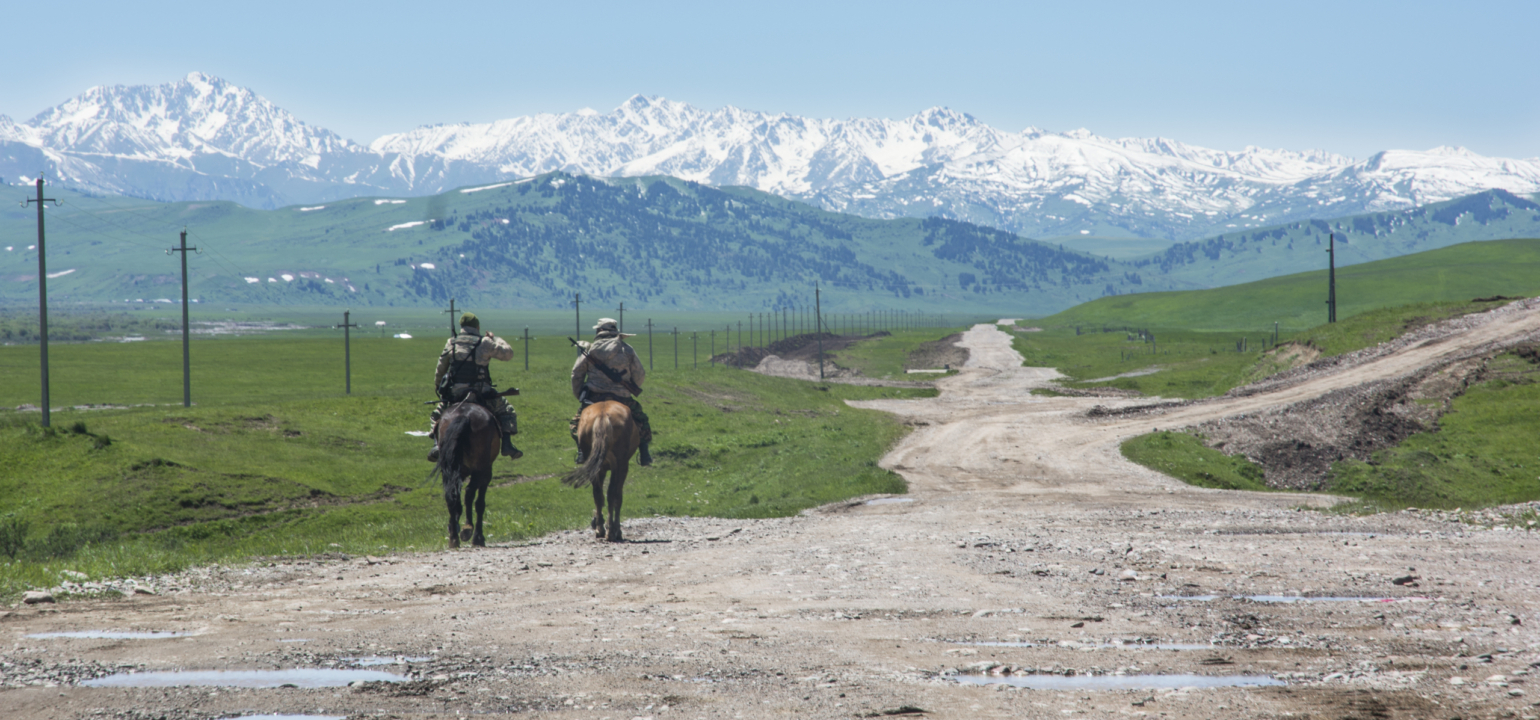
Foto.: Author’s private archive
Przeczytaj też
Comments
Ukrainian attacks are being carried out at a time when global oil prices are sur...
Comments
A blockade of the Strait of Hormuz has a significant impact on global oil and ga...
Comments
The security cooperation agreement signed in early January of this year opens ne...
Comments
On January 17, 2026, the Agreement on Marine Biological Diversity of Areas Beyon...
Web development & Web design: Artixen.net | © 2024 Oppotrunity