Comments
Ukrainian Attacks on Russian Oil and Gas Export Facilities in the Baltic Sea as a Lesson for Polish Critical Infrastructure Facilities
Ukrainian attacks are being carried out at a time when global oil prices are sur...


02.04.2026
A blockade of the Strait of Hormuz has a significant impact on global oil and gas markets. However, for the functioning of the Gulf Cooperation Council (GCC) states, the more immediate challenge is access to water. The conflict, which has been ongoing since February 28, 2026, poses a threat to water supply chains in one of the world’s driest regions.
Dependence of the region on desalination
The Arabian Peninsula lacks permanent, year-round rivers. The majority of natural freshwater resources in GCC countries (Saudi Arabia, Bahrain, Qatar, Kuwait, Oman, the UAE) come from underground aquifers, whose total renewable resources are estimated at 7.21 billion m³ annually. Per capita, GCC states have approximately 120 m³ of natural freshwater per year, while the UN classifies levels below 500 m³ per person per year as “absolute water scarcity” (in Poland, considered a relatively water-scarce country, this level is approximately 1,500 m³ per person per year).Therefore, GCC countries rely on approximately 3,400 desalination plants to desalinate seawater from the Persian Gulf and the Gulf of Oman (as well as the Red Sea in the case of Saudi Arabia) to obtain freshwater for agriculture, industry, and consumption by 61.5 million inhabitants.
Among the countries discussed, Saudi Arabia and Oman are the least dependent on desalinated water, which accounts for 18.1% and 31% of their annual water resources, respectively. These are also the countries with the highest levels of natural freshwater resources per capita in the region – 75 m³ and 286 m³ per person per year, respectively. Kuwait and the United Arab Emirates are moderately dependent on desalination (42.2% and 52.1%), while Bahrain and Qatar are considered highly dependent (67.5% and 77.3%).
Infrastructure vulnerability to attacks.
Despite the large number of facilities, approximately 83.4%[1] of installations in the region are small and medium-sized plants producing up to 9,999 m³ of water per day. Major urban agglomerations such as Riyadh or Doha are supplied by facilities classified as extra large, producing over 100,000 m³ of water per day. Qatar’s Ras Abu Fontas 3 can serve as an example, as it can produce up to 165,000 m³ of water per day and supply 1.1 million residents.
The combined production capacity of the 40–50 largest desalination plants in GCC countries amounts to approximately 23–26 million m³ of water per day, accounting for the dominant share of regional desalinated water production[2]. The concentration of such large production capacity in several dozen major plants increases the vulnerability of the water supply system to disruptions, including large-scale aerial attacks. During the ongoing conflict, initial damage to installations has already occurred, including on Iran’s Qeshm Island, in Bahrain, and in Kuwait; however, none of these attacks has been severe enough to halt plant operations.
Catastrophic consequences of water contamination
During the conflict, a direct strike on desalination plants is not necessary for the region’s freshwater supply security to be threatened.
An oil spill into the waters of the Gulf – whether resulting from damage to a refinery or to one of the 85 tankers awaiting the unblocking of the Strait of Hormuz – could significantly limit or completely halt the intake of seawater for desalination.
Moreover, seawater and desalinated freshwater are used, among other purposes, for cooling and for carrying out chemical processes in power plants and refineries. At the same time, desalination is an energy-intensive process. As a result, such facilities in GCC countries are most often located in proximity, within a single integrated complex. This means that disruptions in the energy system affect the processing capacity of desalination plants, and vice versa.
A reduction in desalination capacity would negatively impact the availability of drinking water as well as the ability to discharge and treat wastewater. Without access to freshwater, domestic agriculture – responsible for producing 15% of food in GCC markets – would be adversely affected. Due to the blockade of the Strait of Hormuz, the import capacity of Gulf states (except for Saudi Arabia and Oman) is significantly constrained. Reduced access to water would also affect the petrochemical sector – not only the aforementioned refineries, but also fertilizer and aluminum production plants (particularly important for the economies of Bahrain and Oman).
Conclusions
The Persian Gulf states are among the most dependent on desalinated water in the world. Damage to this infrastructure could lead to shortages of drinking water as well as water for agriculture and industry — resulting in rising prices and reduced food availability, and in the worst-case scenario, a humanitarian crisis. If desalination processes cannot be utilized, GCC states would have to rely more heavily on limited reserves or groundwater resources.
Although the countries of the region cooperate within a common market and are interconnected through energy networks, they treat access to water as an area of exclusive national sovereignty. Even though GCC countries have tried to establish such mechanisms in the past, there are still no systems for sharing water resources, cross-border transmission, or even formal agreements on transboundary water management, despite the presence of several shared aquifers in the region.
The transport of large volumes of water between countries would be difficult, costly, and insufficient in a crisis. In the event of a severe water crisis, each state would largely have to cope independently, creating strong adaptive pressure to change patterns of water consumption, food production, and employment structures — particularly in the context of the potential departure of foreign workers, on whom many sectors of the region’s economies are heavily dependent.
[1] Author’s estimates based on: “Desalination and the Middle East: research, practices, implications, and prospects”
[2] Author’s estimates based on:„Water Infrastructure in Kuwait”, “Water Resources in Bahrain”, “KSA Desalination Investment Insights” i “Desalination and the Middle East: research, practices, implications, and prospects”
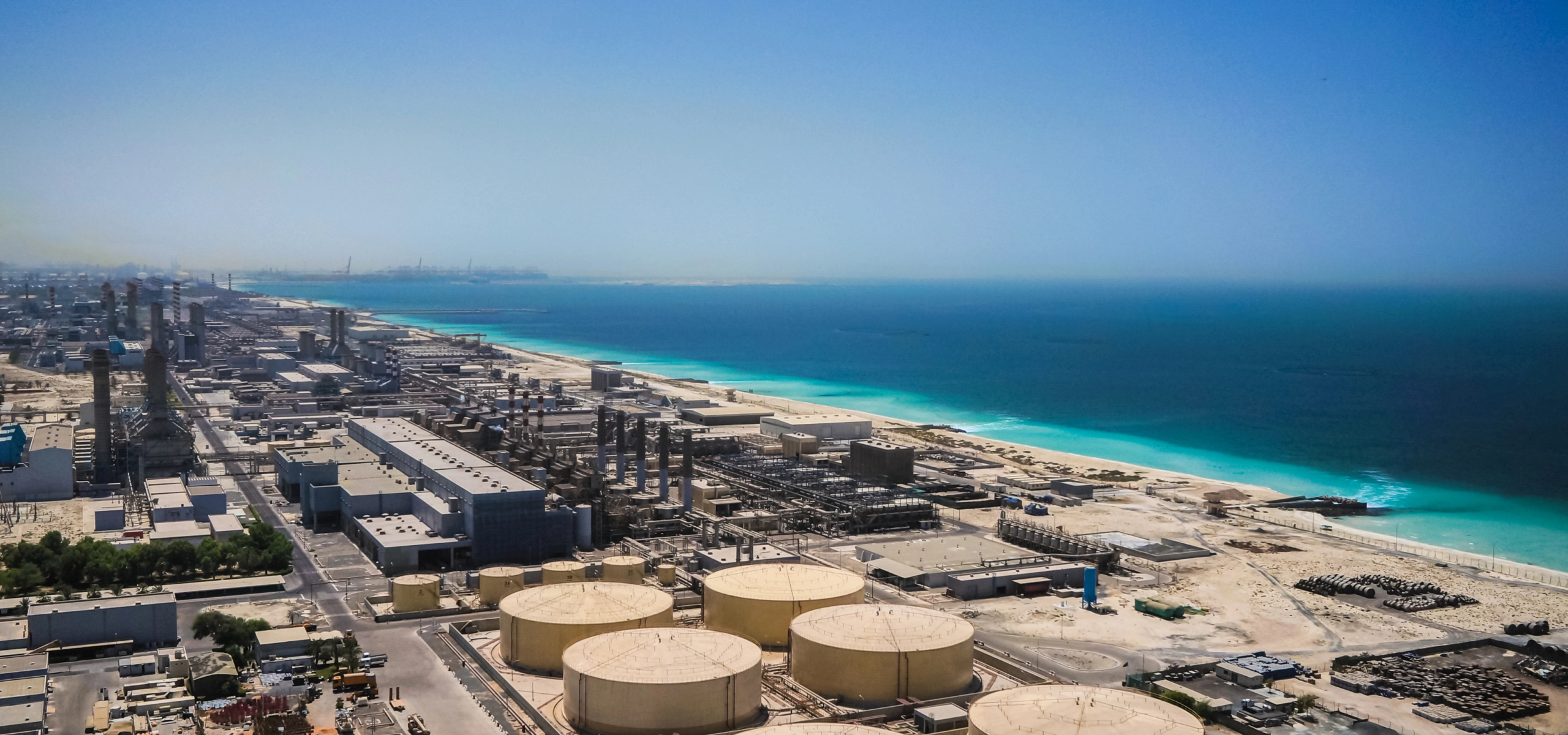
Fot.: Dubai. Summer 2016 roku. Modern desalination plant on the shores of the Arabian Gulf, sablinstanislav/depositphotos.com
Przeczytaj też
Comments
Ukrainian attacks are being carried out at a time when global oil prices are sur...
Comments
On 10 February 2026, President Sadyr Japarov issued a presidential decree dismis...
Comments
The security cooperation agreement signed in early January of this year opens ne...
Comments
On January 17, 2026, the Agreement on Marine Biological Diversity of Areas Beyon...
Web development & Web design: Artixen.net | © 2024 Oppotrunity